Launch offer — valid today only

Masters or Clinical Social Work Exam: See Which Answer Comes First Every Decision Drawn as a Ladder: Safety, Assess, Then Intervene

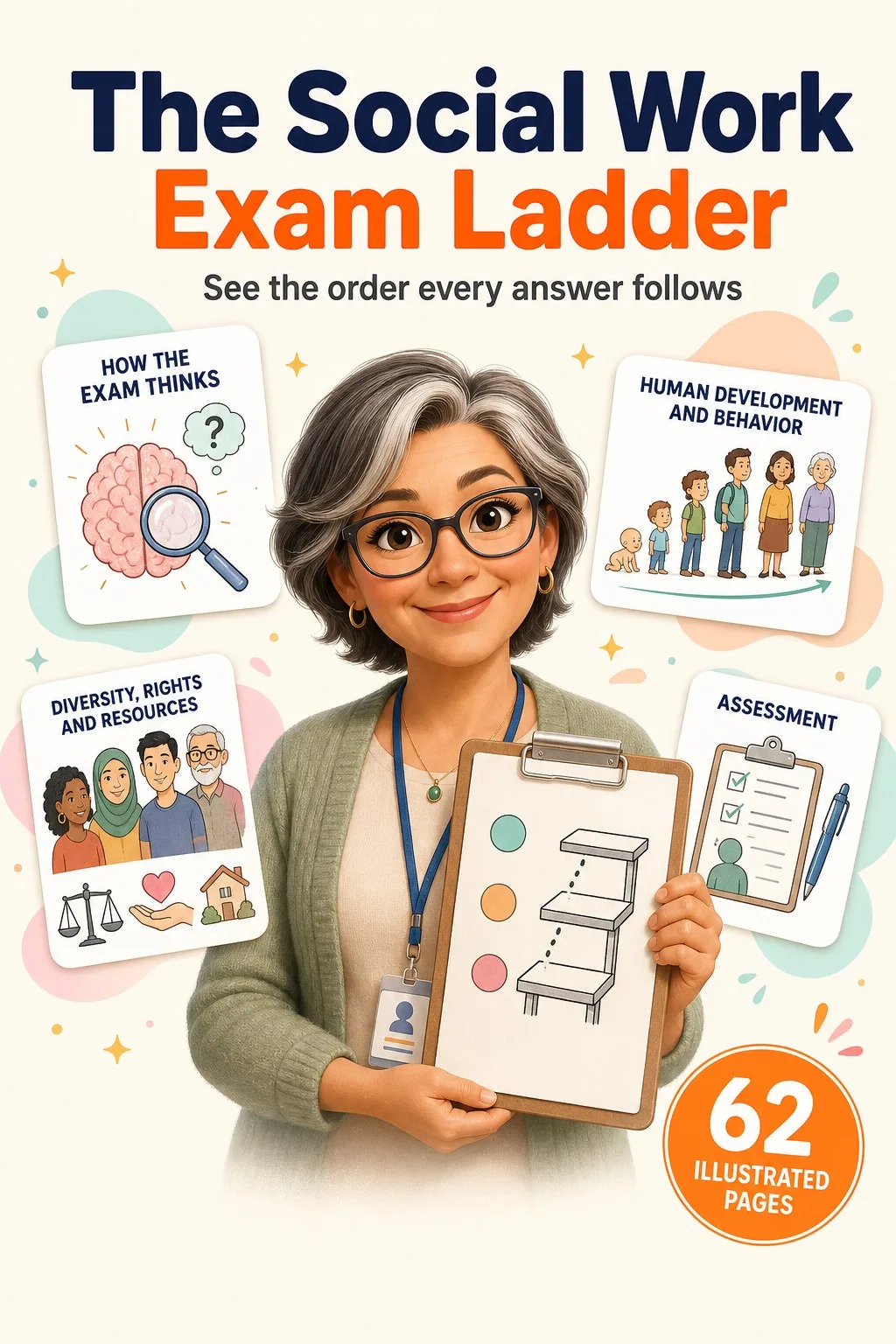
You know the theory, but on practice questions all four options look right. Here every concept gets its own drawn page, both levels are marked, and the same order repeats on every page: safety first, then assess, then intervene. 62 illustrated pages.

I WANT THE ILLUSTRATED GUIDE

🔒 Secure checkout · PDF by email · 30-day guarantee

Each concept on its own pagethe drawing shows you the decision and the text walks you through it
62 illustrated pages8 parts, from how the exam thinks to the night-before review
62 illustrated pages, each concept on its ownCurrent exam content outlines, the profession's Code of Ethics and state board rules

This Is What the Pages You Will Study Look Like

Each concept on its own page, with the drawing that shows you the order of the decision and the boxes with what you need to know:

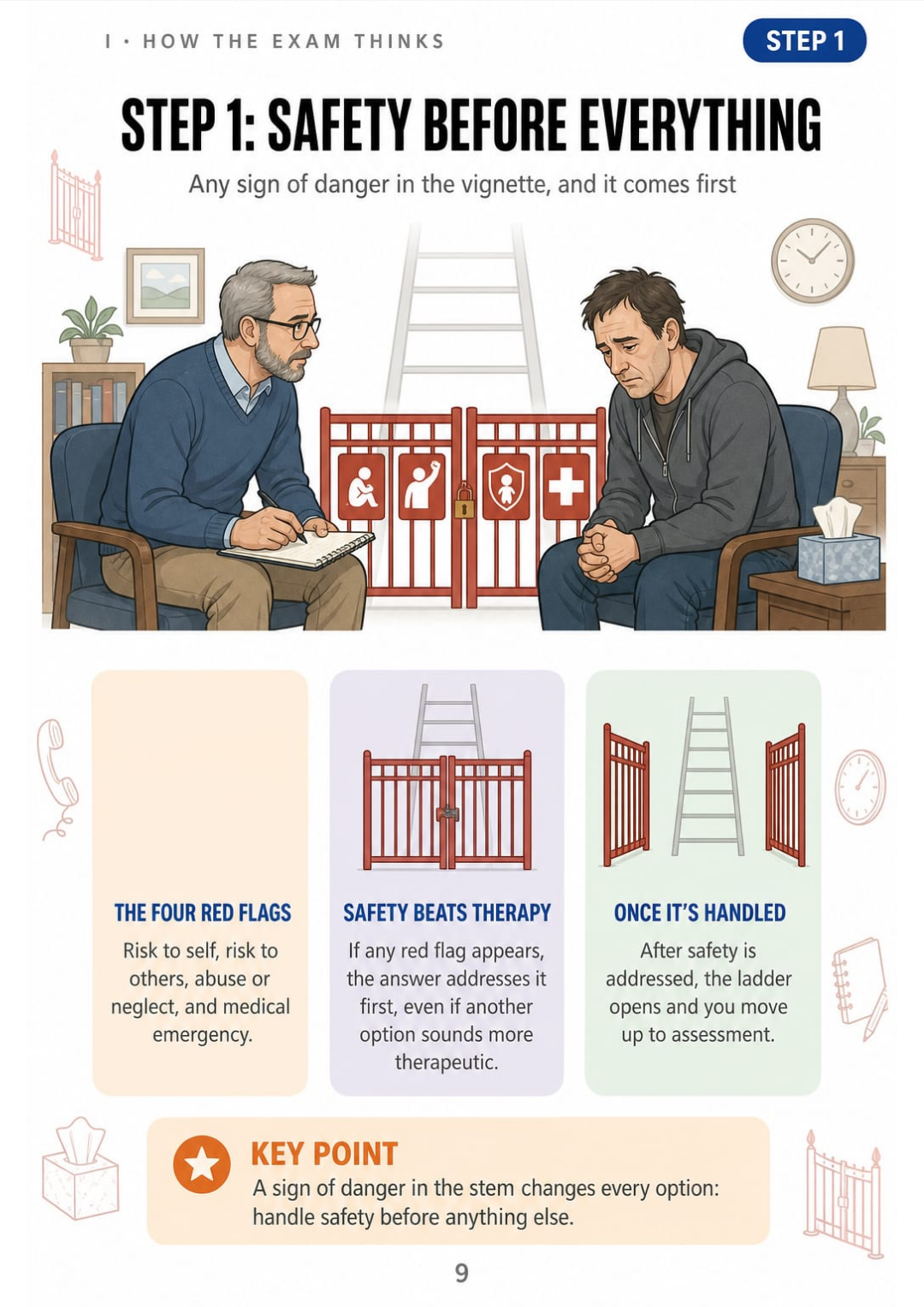
Risk to self, risk to others, abuse or neglect, medical emergency: always step 1.
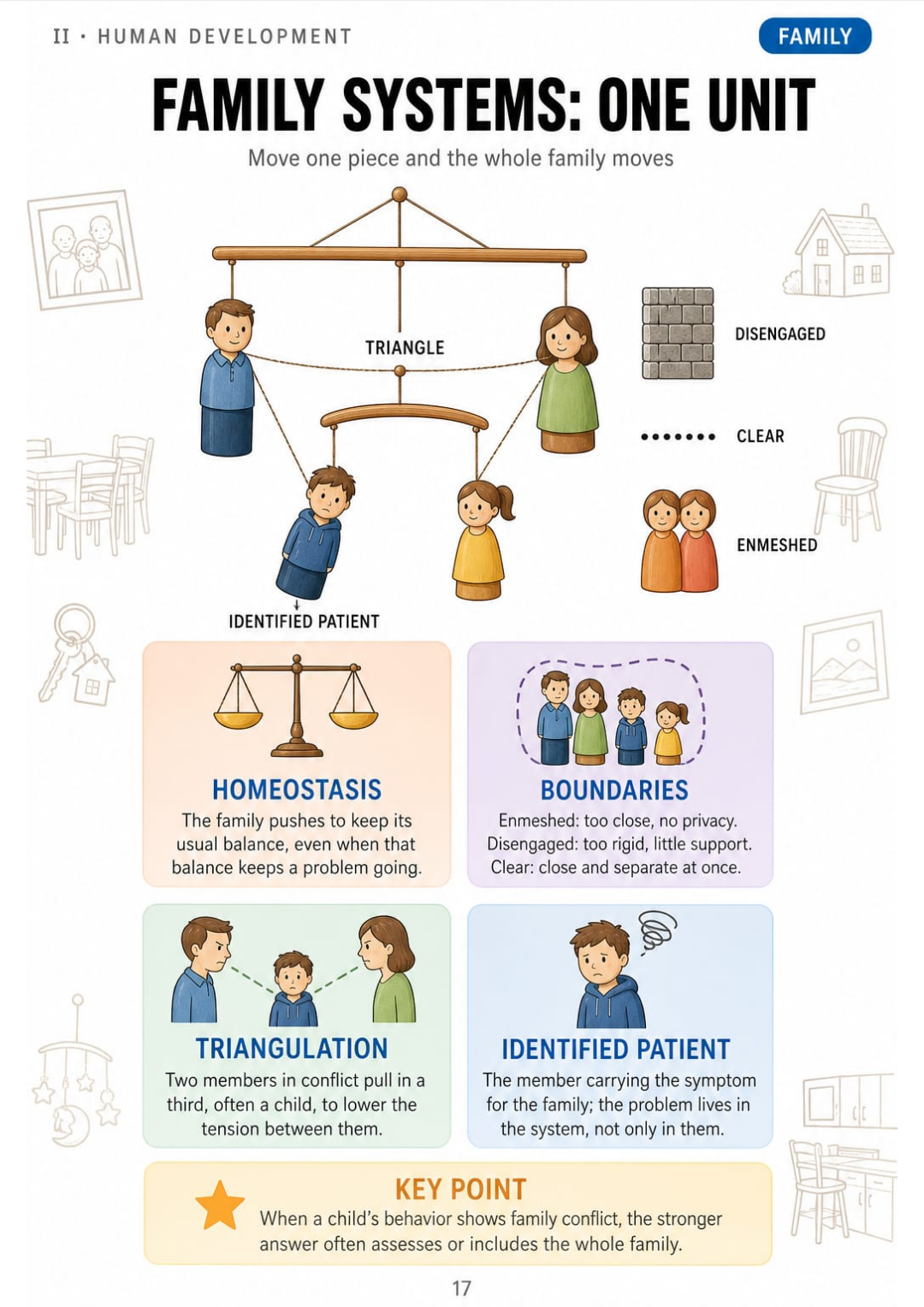
Homeostasis, boundaries, triangulation and the identified patient on one family mobile.
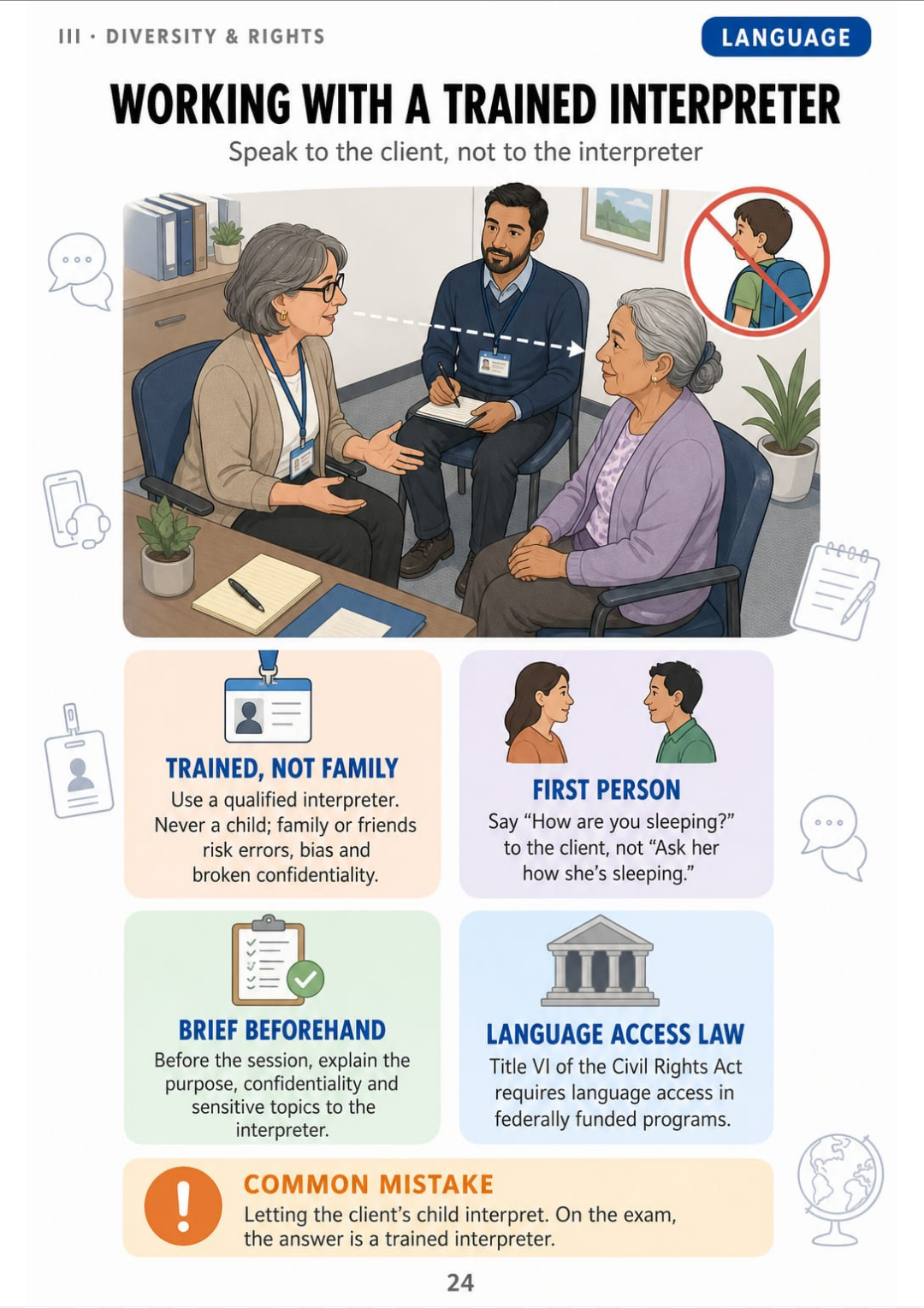
The seating triangle: the worker faces the client, the trained interpreter sits to the side.
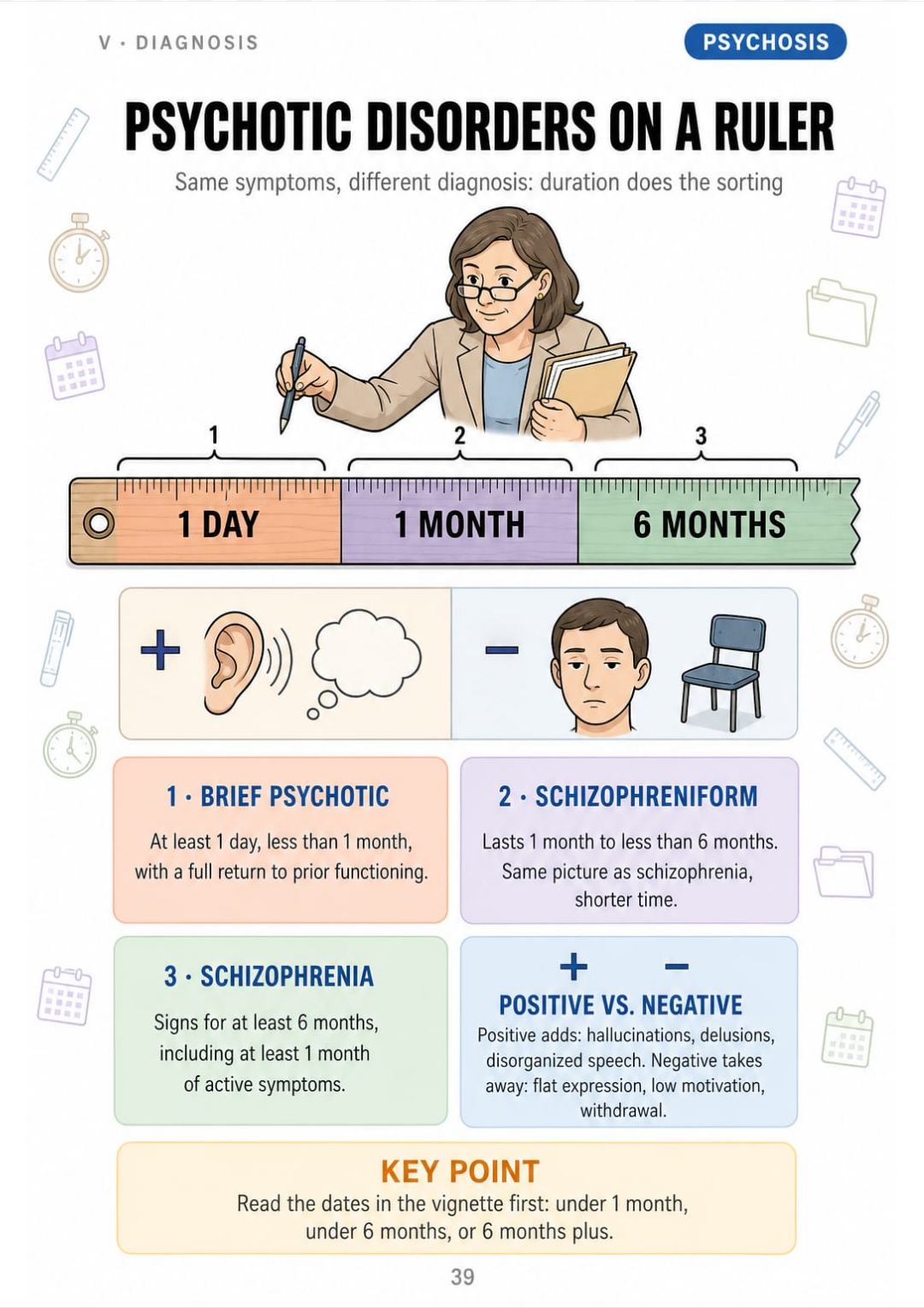
Brief under 1 month, schizophreniform under 6 months, schizophrenia 6 months or more.
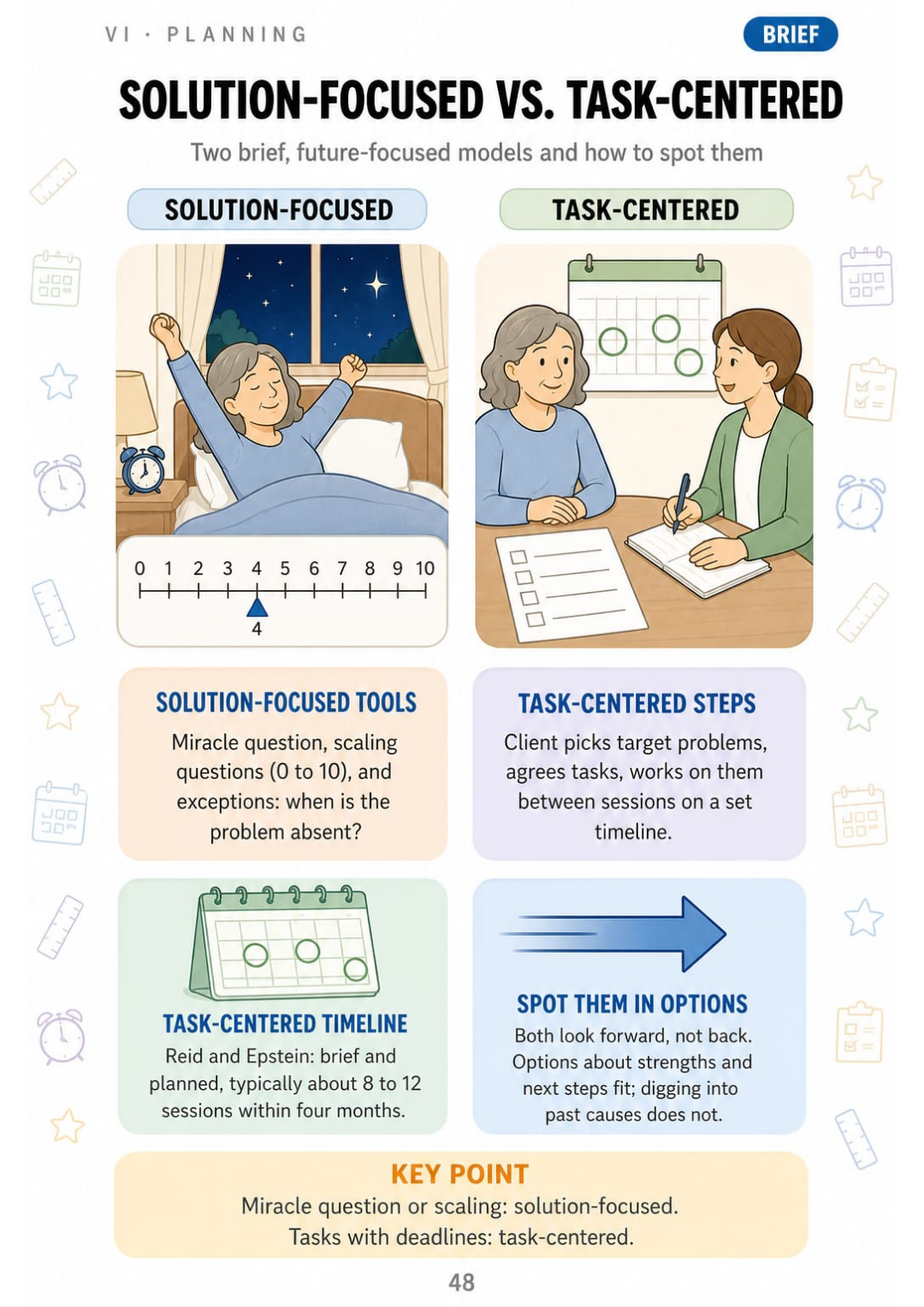
Solution-focused questions and 0-10 scaling next to task-centered tasks on a set timeline
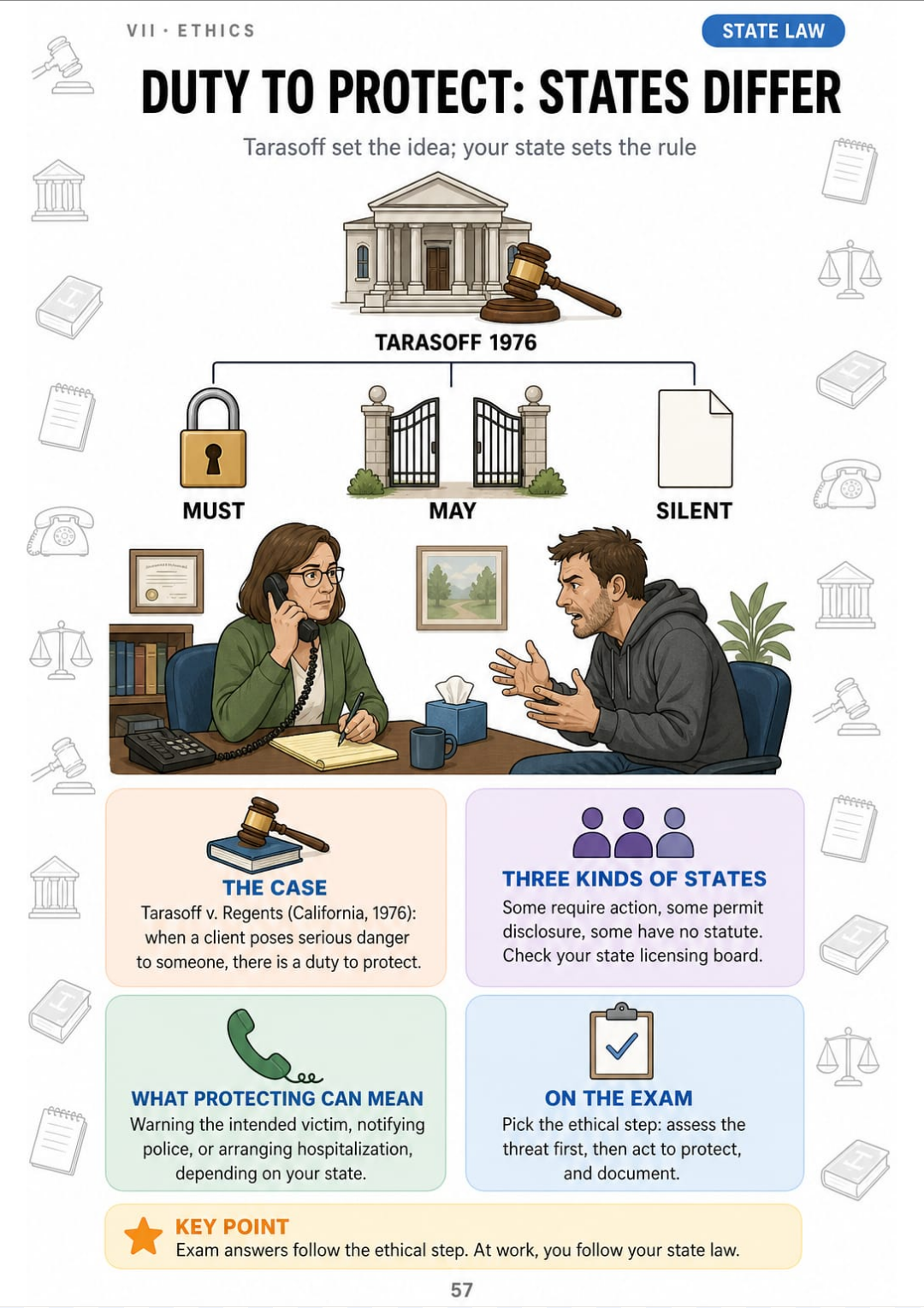
Tarasoff (1976): states require, allow, or say nothing about duty to protect
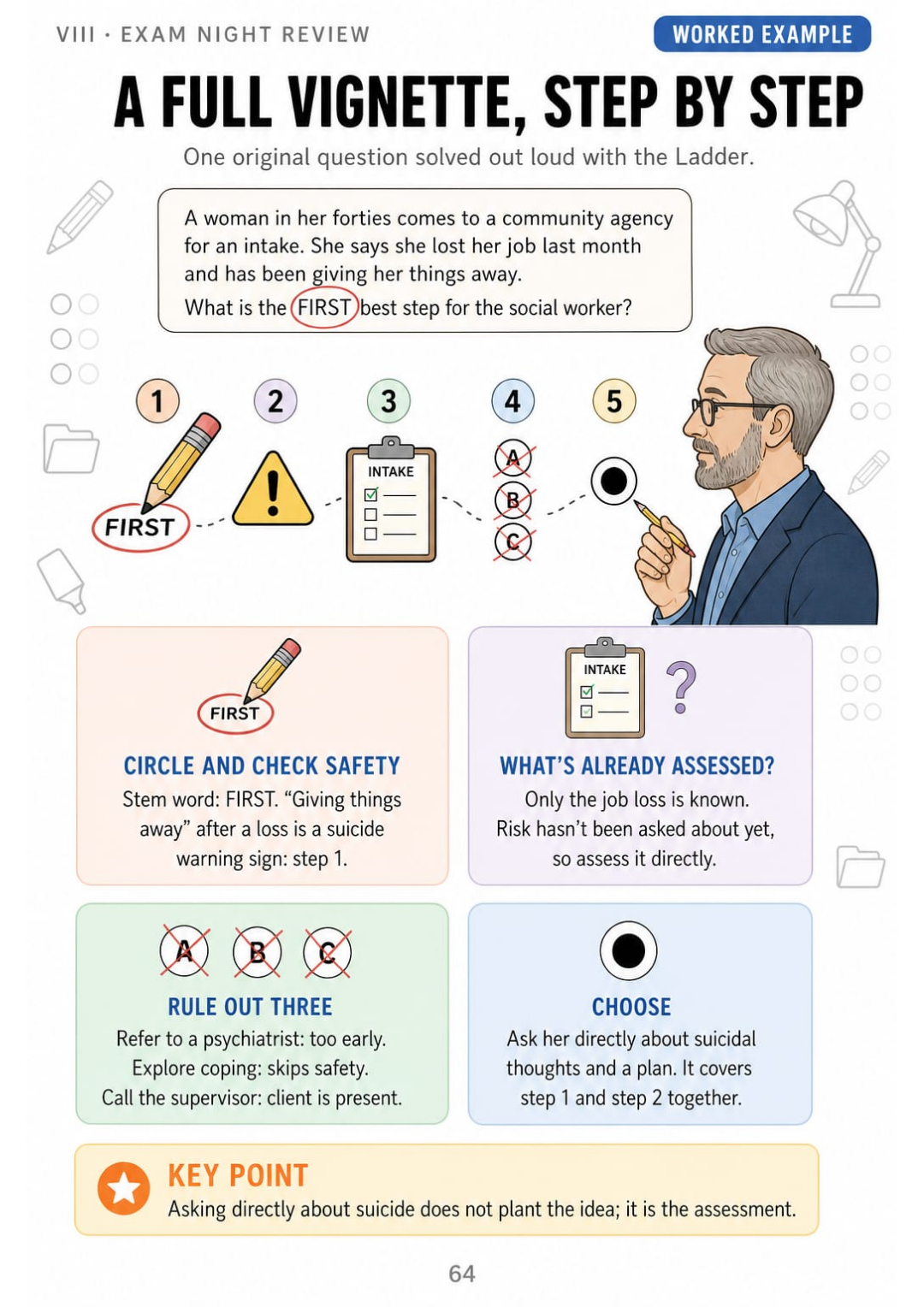
One original vignette: circle FIRST, spot the risk, rule out 3, choose

Swipe to see more →

These are real pages from the book. The table of contents is the full one: 8 parts and 62 topics.

It's Not Your Memory. Nobody Ever Put It in Order for You.

You've read the same chapter on ethics three times. You close your notes...

...and on the next practice question, all four answers still look right. It was just lines of text.

The seating triangle: the worker faces the client, the trained interpreter sits to the side.

Here the decision is a drawn ladder, one step after another: safety first, then assess, then intervene.

And on the pages next to it, every concept gets its own drawing: family systems, defense mechanisms, diagnosis time frames, informed consent and duty to protect.

First you understand why it goes in that order. Then you remember the order on your own.

SEE THE DIFFERENCE

Stop memorizing rules you can't picture:

THIS
  • Pages and pages of dense text
  • Rules without a single drawing
  • On the exam, every option looks correct and none stands out
Family systems theory conceptualizes the family as an emotional unit in which the behavior of each member is understood in relation to the functioning of the whole, such that changes in one member's patterns of interaction necessarily produce compensatory adjustments elsewhere in the system, which tends toward homeostasis; within this framework, concepts including differentiation of self, triangulation, the designation of a symptomatic member as the identified patient, and the permeability of subsystem boundaries are employed to explain the maintenance of relational patterns across generations.
FOR THIS
  • Every decision drawn
  • Each concept drawn on its own page, rules in boxes
  • You remember it because you've seen it
Homeostasis, boundaries, triangulation and the identified patient on one family mobile.
CONTENTS

Take a Look at the 8 Parts and 62 Topics

How the exam thinks, human development and behavior, diversity, rights and resources, assessment, diagnosis concepts, planning and intervention, ethics and professional relationships, and the night-before review: 62 illustrated pages, each concept on its own

IHow the Exam Thinks · pp. 5-12
  1. Masters or Clinical: which exam is yours
  2. The exam at a glance
  3. How the content outline is organized
  4. The Ladder: the order every answer follows
  5. Step 1: Safety comes before everything
  6. Step 2: Assess before you act
  7. The words in the stem that change the answer
  8. Four options that all look right
IIHuman Development and Behavior · pp. 13-21
  1. Erikson's eight stages on one timeline
  2. Piaget: how children think at each age
  3. Attachment styles at a glance
  4. Defense mechanisms you need to tell apart
  5. Family systems: the family as one unit
  6. The ecological view: the person in the environment
  7. Maslow and the order of needs
  8. Grief and loss: patterns, not a schedule
  9. Trauma and how it shows up
IIIDiversity, Rights and Resources · pp. 22-26
  1. Cultural humility in practice
  2. Oppression, privilege and intersectionality
  3. Working with interpreters
  4. Key U.S. laws behind the services
  5. Advocacy: case, cause and policy
IVAssessment · pp. 27-35
  1. The first interview: what comes first
  2. The biopsychosocial assessment on one page
  3. Suicide risk: the signs that put you on step 1
  4. Risk of harm to others
  5. Child abuse and neglect: the indicators
  6. Elder abuse and intimate partner violence
  7. Substance use: what to assess
  8. The mental status exam in plain words
  9. Genogram and ecomap: reading them fast
VDiagnosis Concepts · pp. 36-42
  1. How the DSM is used in an assessment
  2. Mood disorders told apart
  3. Anxiety, trauma and OCD-related disorders
  4. Psychotic disorders by time frame
  5. Personality disorders: the three clusters
  6. Disorders that start in childhood
  7. Diagnosis words that look alike
VIPlanning and Intervention · pp. 43-52
  1. From assessment to goals
  2. Stages of Change: meet the client where they are
  3. Motivational interviewing in four moves
  4. Crisis intervention: short and focused
  5. Cognitive and behavioral approaches
  6. Solution-focused and task-centered models
  7. Psychodynamic ideas in plain words
  8. Group work: stages and roles
  9. Case management, referral and follow-up
  10. Evaluating practice and closing services
VIIEthics and Professional Relationships · pp. 53-61
  1. The six core values of the NASW Code
  2. Self-determination and its limits
  3. Informed consent, step by step
  4. Confidentiality and where it ends
  5. Duty to protect: why your state matters
  6. Mandated reporting: when and to whom
  7. Boundaries and dual relationships
  8. Supervision vs. consultation: who you call
  9. Ethical dilemmas: a decision order
VIIIExam Night Review · pp. 62-66
  1. The Ladder on one page
  2. The most frequent reasoning mistakes
  3. A full vignette worked step by step
  4. Checklist for the last two weeks
  5. Test day: logistics and pacing

What If Every Concept Had Its Own Page?

Picture this:

Instead of rereading half a page on duty to protect without being able to see where the line is...

...you open the page and find the three ways states handle it, side by side in one drawing.

Solution-focused questions and 0-10 scaling next to task-centered tasks on a set timeline

Family systems becomes one family mobile. Psychotic disorder time frames sit on a ruler: under one month, under six, six or more. And working with an interpreter is a seating triangle: you face the client.

You stop rereading and start understanding.

That's exactly what The Social Work Exam Ladder does. 8 parts and 62 illustrated concepts, and at the end a full vignette worked step by step and the Ladder on one page.

Because drawings show the relationships that paragraphs can only describe.

Here Is What You Get with The Social Work Exam Ladder:

Ipp. 5-12

How the Exam Thinks

Masters or Clinical, the exam at a glance and the Ladder: safety first, assess before you act. You learn to spot the words in the stem that change the answer, so four options that all look right stop being a coin toss.

IIpp. 13-21

Human Development and Behavior

Erikson's eight stages, Piaget, attachment styles, defense mechanisms, family systems, the ecological view, Maslow, grief and loss, and how trauma shows up.

IIIpp. 22-26

Diversity, Rights and Resources

Cultural humility, oppression, privilege and intersectionality, working with interpreters, the key U.S. laws behind services, and case, cause and policy advocacy.

IVpp. 27-35

Assessment

The first interview, the biopsychosocial assessment, risk of harm, abuse and neglect indicators, the mental status exam in plain words, and reading a genogram and an ecomap fast.

Vpp. 36-42

Diagnosis Concepts

How diagnosis fits into an assessment, mood and anxiety-related disorders told apart, time frames on a ruler, the three personality clusters, childhood-onset disorders and look-alike terms.

VIpp. 43-52

Planning and Intervention

From assessment to goals, stages of change, motivational interviewing, crisis intervention, cognitive-behavioral, solution-focused, task-centered and psychodynamic ideas, group work, case management and closing services.

VIIpp. 53-61

Ethics and Professional Relationships

The six core values, self-determination, informed consent, confidentiality, duty to protect by state, mandated reporting, boundaries, supervision vs. consultation, and a decision order for ethical dilemmas.

VIIIpp. 62-66

Exam Night Review

The Ladder on one page, the most frequent reasoning mistakes and a full vignette worked step by step. Plus a checklist for your last two weeks and test-day pacing, so your final review has a plan.

At the end of the book: A full vignette worked step by step, the Ladder on one page and both levels marked on every concept.


And That Is Not All: 2 More Books, Free

Ladder Drills: Practice Questions by Level

BONUS 1: «Ladder Drills: Practice Questions by Level»

Value on its own: US$ 17.90

Practice the decision order on original questions, Masters and Clinical in separate sets, with the reasoning behind every single option.

The Tempting Answers: Review Sheets

BONUS 2: «The Tempting Answers: Review Sheets»

Value on its own: US$ 14.90

Review the most frequent reasoning mistakes on one-page sheets, so a good-but-not-yet answer stops looking like the right one.

The Social Work Exam Ladder + 2 Free Books

  • The Social Work Exam Ladder: 62 illustrated pagesUS$ 67.90
  • BONUS 1: Ladder Drills: Practice Questions by LevelUS$ 17.90
  • BONUS 2: The Tempting Answers: Review SheetsUS$ 14.90
  • High-resolution PDF to printIncluded
Total value US$ 100.70
YOUR PRICE:
US$ 27
You save US$ 73.70
YES, I WANT THE SOCIAL WORK EXAM LADDER FOR US$ 27

📄 This is a digital PDF book sent to your email: nothing is printed or shipped.

Secure purchaseEncrypted payment30-day guarantee

PDF by email: The Social Work Exam Ladder reaches your inbox as a PDF, and the two free books come by email too. One-time payment, no installments or hidden costs.

Is This Book for You?

You just finished your MSW

You just finished your MSW

Every concept in the order the exam thinks, each on its own page, to review at night or on weekends around work and family.

Your exam date is on the calendar

Your exam date is on the calendar

Both levels marked on every concept, the Ladder on one page and a full vignette worked step by step for your final weeks.

You already practice and you're going for the Clinical

You already practice and you're going for the Clinical

The Clinical-only concepts are marked, so you see which ones are yours and review them without starting from zero.

To Sum Up: Here Is What You Get

US$ 100.70US$ 27
YES, I WANT THE SOCIAL WORK EXAM LADDER FOR US$ 27

📄 This is a digital PDF book sent to your email: nothing is printed or shipped.

30DAYS
GUARANTEE

30-Day Guarantee

30-day guarantee: tell us what didn't work and we'll refund 100%.

30-day guarantee: tell us what didn't work and we'll refund 100%. You have 30 days to try The Social Work Exam Ladder and the two bonus books. If a file won't open, if the content isn't what this page describes, or if it simply didn't help you study, email us, tell us what didn't work, and we'll refund 100% of what you paid. One-time payment, no subscription.

Frequently Asked Questions

How do I get the material?

The Social Work Exam Ladder comes as a high-resolution PDF by email, to the address you enter at checkout. The two bonus books, Ladder Drills: Practice Questions by Level and The Tempting Answers: Review Sheets, also come as PDFs by email.

Can I read it on my phone?

Yes. It's a high-resolution PDF you can read on your phone, a tablet or a computer screen, wherever you study.

Is it a monthly or a one-time payment?

One-time payment. No installments and no subscription.

Who is it for?

For people preparing for the Masters or Clinical social work licensing exam in the U.S. Concepts are checked against the content outline that applies to tests taken from August 2026, and every concept is marked by level, so you see which ones are Clinical-only. It isn't a beginner's book: it assumes you're in or have finished your MSW. Check the table of contents above to see every concept.

What sources is it based on?

On the official content outlines and candidate handbook for the Masters and Clinical exams, the profession's Code of Ethics, and state licensing board rules for concepts like mandated reporting and duty to protect. Diagnosis concepts and ethics are explained in our own words, without copying criteria.

Is it official material?

No. It's an independent study guide for the Masters and Clinical social work licensing exams. Not endorsed by or affiliated with ASWB, APA or NASW.

Does it replace my program or supervision?

No. It's study material: it doesn't replace your MSW program, your supervised hours, clinical supervision or professional consultation, and it doesn't give treatment advice. It doesn't include a certificate or CE credit.

Are the practice questions from the real exam?

No. Every question is written from scratch for this book and its bonus. They aren't official questions, recalled questions or items from any question bank: they're for practicing the decision order. Studying with them doesn't guarantee you'll pass.

Can I print it?

Yes. It's a PDF you can print at home or at a print shop, all of it or just the pages you need, to keep on hand.

What if I don't like it?

You're covered for 30 days: email us, tell us what didn't work, and we'll refund 100% of what you paid.

Does it work in my state?

The book follows the national exam content outline. The license itself is issued by each state, with its own requirements and rules, such as duty to protect. Confirm them with your state social work board.

I already have a course and a question bank. What does this add?

It doesn't replace them: it sits next to them. Your question bank tells you which answer is right; this shows you the order behind it. Each concept drawn on its own page, the same decision order on every page, your level marked, and bonus practice questions that explain all four options, not just the right one.

One Last Thing Before You Decide...

You don't have to reread the same page hoping it sticks this time.

You don't have to memorize rules you can't picture.

And you definitely don't have to face the exam wondering which step comes first.

One last thing before you decide: you already have the notes. What's been missing is the order. Here it is, drawn on 62 illustrated pages, the same on every one.

One-time payment: US$ 27 · Guarantee: 30 days · PDF by email

YES, I WANT THE SOCIAL WORK EXAM LADDER FOR US$ 27

📄 This is a digital PDF book sent to your email: nothing is printed or shipped.